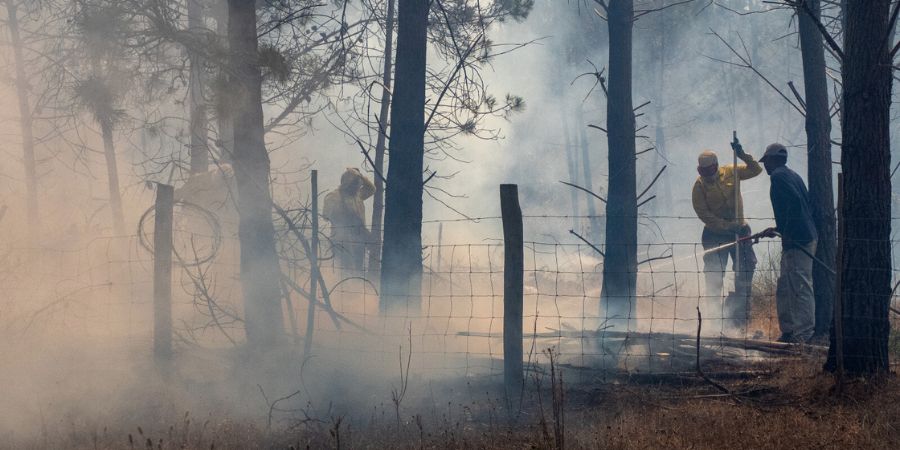
The veldfire in and around Stanford, which burned for 10 days, became a critical test for the Greater Overberg Fire Protection Association (goFPA), firefighting services/teams and landowners.
While the fire burnt around 13,500 hectares under exceptionally hot, dry and windy conditions, it also showed how pre-fire preparation and integrated fire management can make the difference – when a carefully planned, strategically placed and well-maintained firebreak helped bring the blaze under control.
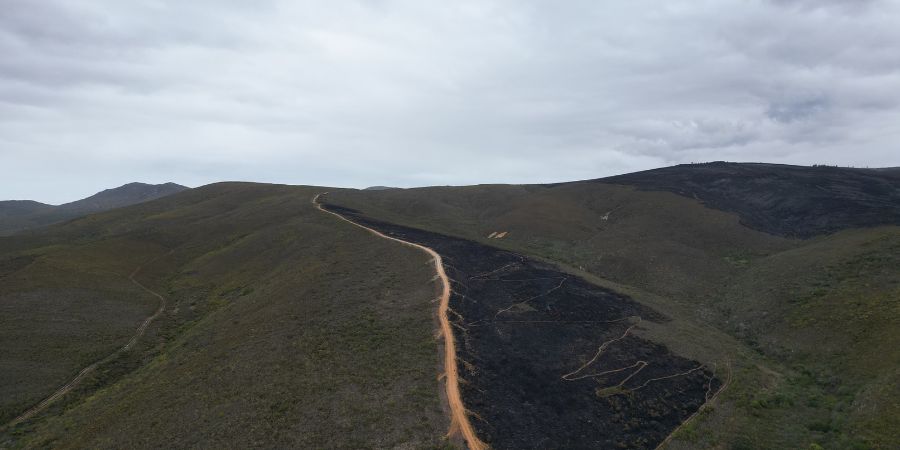
The 11.5 km firebreak was conceived by the goFPA in 2019. Funding was secured from the Western Cape Department of Agriculture, which also managed the team that cut the break through often dense fynbos. The line was established along a mountain ridge between Gansbaai and Stanford.
The value of long-term planning
According to goFPA Manager Louise Wessels and goFPA Project Manager Mitch Afrika, the firebreak had a clear purpose from the start. Louise says, “We knew back in 2019 that the day would come when a fire would start in the mountainous area between Stanford and Gansbaai. And if it did, it would be incredibly difficult to stop without a firebreak.”
Although the break was completed that year, sections had started to close up again by 2024. “So we took action, supported by the Walker Bay Fynbos Conservancy and the Fynbos Trust – this time approaching the Table Mountain Fund,” says Wessels. The Fund, an associated trust of WWF South Africa, awarded a grant to the goFPA in 2024 for firebreak maintenance, including this line, with further work completed in 2025.
“It was only because of this firebreak that we managed to stop the Stanford fire on the mountains on the southern flank – not only protecting infrastructure and livelihoods, but also helping to protect the remaining natural vegetation,” Wessels says.
“On the eighth day of the fire, the goFPA team and Fire Management Unit leaders for the area looked at options to stop the approaching fire lines. They mobilised the landowners and with the support from the Overstrand Municipality’s Fire Services successfully carried out a backburn from this point. Without it, we’d be having a very different conversation today.”
Tackling the inferno on the eastern flank
Another firebreak, also funded by the Table Mountain Fund, helped slow the fire on the eastern flank. This 6.1 km line on the Akkesdisberg was a joint initiative between the goFPA, TMF and local landowners. “This firebreak also proved vital,” says Afrika. “We used it as a cut-off point to slow the fire in extreme heat, wind and drought, giving us space to regroup and adapt our strategy.”
At the same time, controlled burns carried out three to four years ago also played a key role. Despite the speed and intensity of the fire, it lost momentum when it reached younger veld on these properties.
Some of the worst fires in living memory
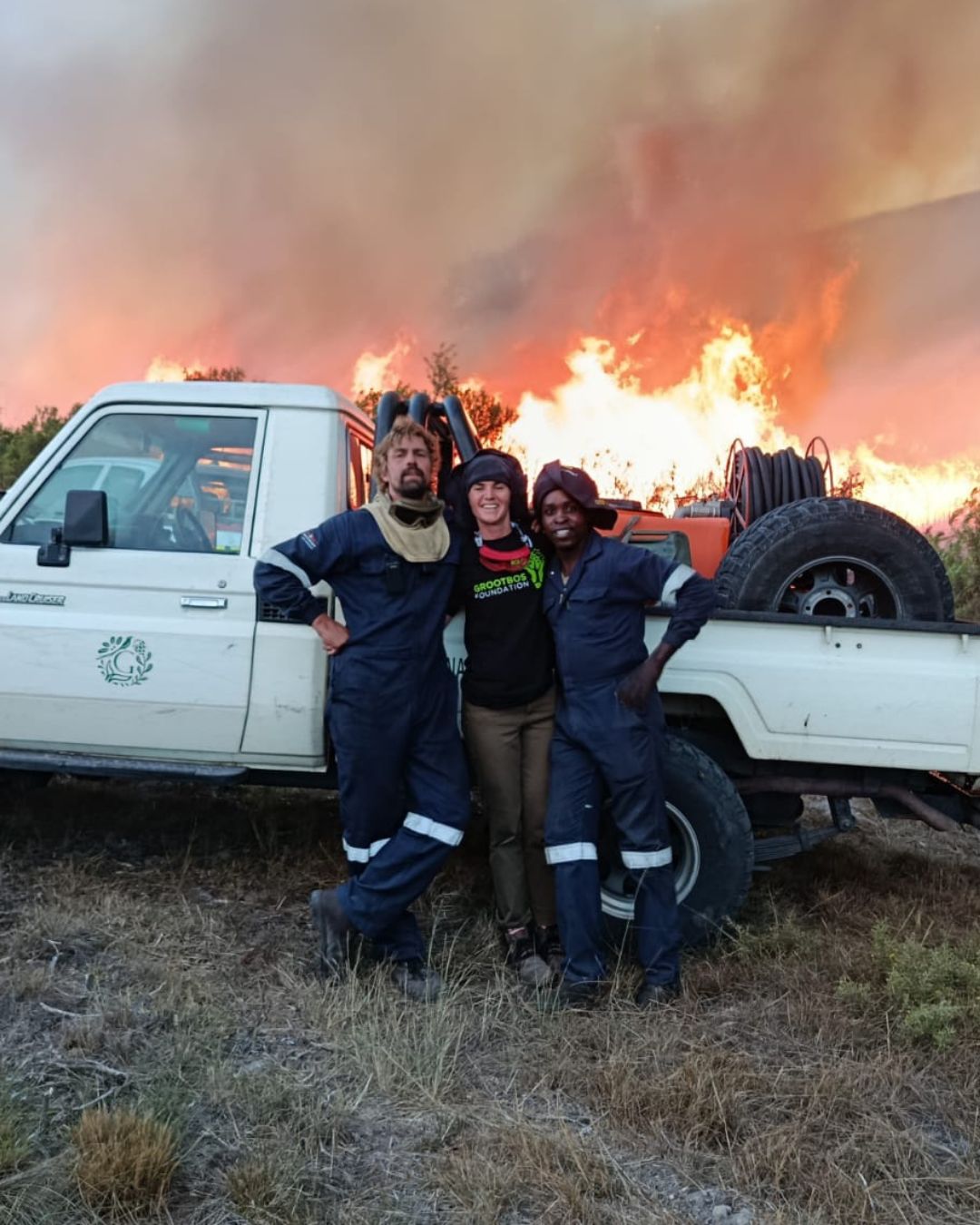
“We could not have foreseen the exact conditions we experienced as the fire burned around Stanford and Pearly Beach,” says Wessels. “It was the perfect combination of heat, wind and drought – creating some of the most dangerous fires our region has experienced in living memory. But this shows the importance of Integrated Fire Management. Preparation matters, and thanks to these firebreaks and controlled burns, things could have been far worse.”
Integrated Fire Management is a holistic, landscape-level approach that balances ecological, social and economic needs by managing both harmful and beneficial fires. It brings together prevention, preparedness, suppression and recovery to reduce wildfire damage, strengthen ecosystem resilience and incorporate local knowledge.
This recent veldfire was a reminder of why long-term planning matters. Integrated Fire Management isn’t just about responding to fires when they happen, but also about sustained, proactive work that helps makes landscapes safer over time. “We have to prepare now for what could happen in 10 to 15 years,” she says. “That includes clearing invasive alien plants. These fires were undoubtedly fuelled by high levels of invasion, as these species burn hotter and faster than indigenous fynbos. It highlights the urgency of tackling these threats now, before we are forced to confront fires of similar scale in the future.”
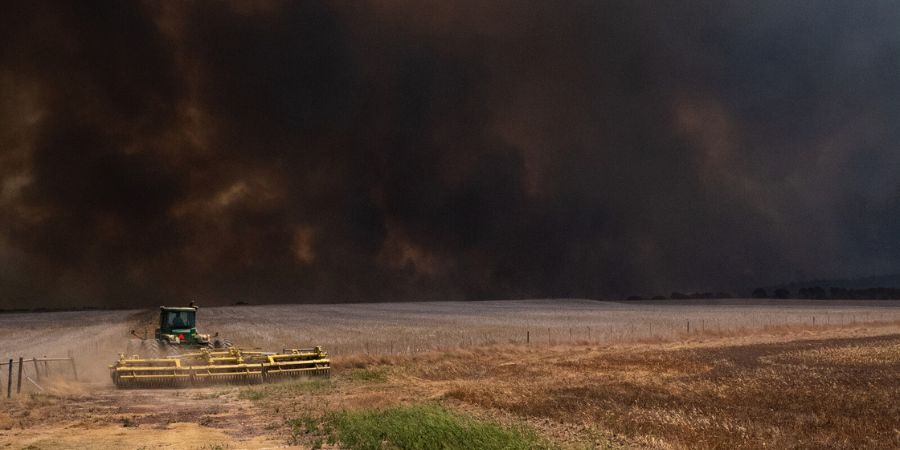
A team effort
Wessels adds, “We could not have successfully dealt with these fires without the assistance of Overberg farmers and farm teams. Resources were stretched by these massive fires, but farmers came from across the district and beyond to help. This was not only instrumental in carrying out the successful backburns but also in helping to extinguish the blaze.”